

Drawings and documents
National Archives restored drawings: drawing
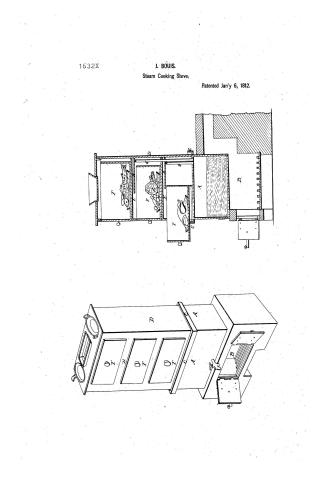
J. Bouis' Patent Drawing for a Steam Drawer Kitchen

National Archives, Restored Patent Drawings (Record Group 241) · Full-size scan at the National Archives · Catalog record
Show the text on the drawing Hide (94 words)
Words on the drawing as machine-read by the National Archives; not checked. Useful mainly for searching.
$150 126. STOVES & FURNACES, / CLASSIFICATIONteam Cooking Stoves. / 1632-X / Calointre / DIVISION. Boder / J. o BOUIS / Steam Drawerkitchm / A. Boiler / B. Fire Wace / Patruted 4" Jan 1812. / c. Projecting flanch 07' Gutter / D. Steamer, or Exterior case / E. Separating bollows / F. Steaming drawers / a Conducting steampines / H. Metalplates / Section / C, / of / On / of / 4, / OR / Strickland Del" / "for various overiptions of cov Kere / Patent office Dec my / Made under the derection of the commissioner of hat / conformity with ach of 3 March 1837 / morth
USPTO scan
The patent as scanned by the USPTO
-
 Page 1
-
 Page 2
-
 Page 3
-
 Page 4


U.S. Patent and Trademark Office · Google Patents
Show the transcription Hide (769 words)
Machine transcription (LightOnOCR) of the pages as scanned by the USPTO, most of them the handwritten copies made when the records were restored after the 1836 fire. Not checked; it can misread handwriting, so compare it with the scan.
Page 1.
1632X
J. BOUIS.
Steam Cooking Stove.
Patented Jan'y 6, 1812.

Page 2.
John Jones
Sutter Patent
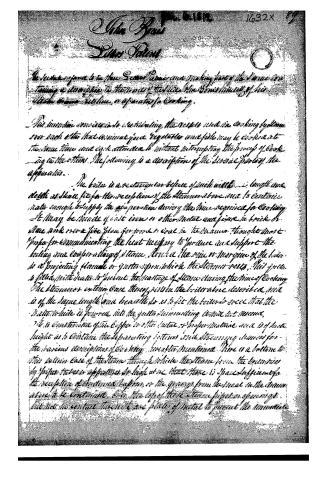
The enclosed report to the New Second Patent was making part of the same, containing a description in the name of the same, the same himself of his steam oven machine, or apparatus for cooking.
This invention consists in so combining the vessels used in cooking by steam over each other that animals, fruit, vegetables, and fish may be cooked at the same time and each attended to without interrupting the process of cooking in the others. The following is a description of the device forming the apparatus.
The boiler is a rectangular box of such width and length and depth as shall fit for the reception of the steamer above, and is constructed so as to supply the proportion during the time required for cooking. It may be made of cast iron or other metal and fixed in brick or stone work over a fire place for wood or coal, in the manner thought most proper for communicating the heat necessary to produce and support the boiling and coagulating of steam. Around the rim or margin of the boiler is a projecting flange or gutter upon which the steamer rests. This gutter is fitted with ducts to prevent the passage of steam during the time of cooking. The steamer or outer case, though not in the boiler above described, and is of the same length and breadth so as to fit the boiler so as …
Page 3.
of the steam, and to diffuse it equally over the whole surface of the steaming chamber that rests there. The first or lower steaming chamber rests there. The first or lower steaming chamber is made hollow like the case above described on the first bottom horizontal division. This chamber has its first head and lining of tin or other metal and under the bottom and has a more strong division to separate the various kinds of animal foods to be steeped in there by steam at the same time. The bottom is perforated with holes to admit the steam only to ascend. This chamber is of such depth as steam when it rises usually suffices by steam to lay thereon immediately above this chamber lies another horizontal floor, bottom or pan connected with the case and has openings or pipes for the steam to rise through as in the bottom above described which receives the water that descends from the registers in the steaming chamber above and from it is drawn into the chamber containing the animal substances. The second chamber is for vegetables and is constructed like that for animal substances but with divisions in the different kinds.
There is another bottom or partition connected with the outside case for the reception of the liquor which descends from the first chamber above this bottom forming part of the first chamber and through which the steam rises as above described. This first chamber is of the same size as the lower part of the case and may either rest on it over the registers or be placed immediately over the latter, over there is a cover that allows you upon the case over the vegetables or over the first chamber. In this case we have a preparation for the admission of the bottom of the same form as that for steaming both or making grays. There are certain large hammers to deodorize and first steaming by which they are rendered of pleasure. The waste steam may pass off through the openings for the steam from the case in the cover, or the steam shall spring up at the edges of the chambers, or there may be a safety valve in the top at the pleasure of the one who uses.
The steamer is a cask for the discharge of the waters which can be used for any purpose that hot water is required for. The great advantages of this invention are the small space it occupies as the kettle has not to be more than
Page 4.
the fact in length and comfort there for a large family, it takes but little fuel, and a very part of the profit of cooking could be increased by taking out the stove and using instead in the fireplace the stove in the
William Hunter
Geo Lyon
John B.
End.
1860
975 1860
About this record
- Patentee
- DATAMP
- Date
- the Name and Date index of patents, DATAMP, USPTO records
- Invention
- DATAMP
- Listed in
- the Name and Date index of patents, DATAMP, USPTO records, Jim Shaw's X-patent list, S. A. Elliot's printed list of patents, Burke's List of Patents (1847)
- S. A. Elliot's printed list of patents gives the same name and date.
- Burke's 1847 Patent Office list gives the same patent.