

Drawings and documents
National Archives restored drawings: drawing
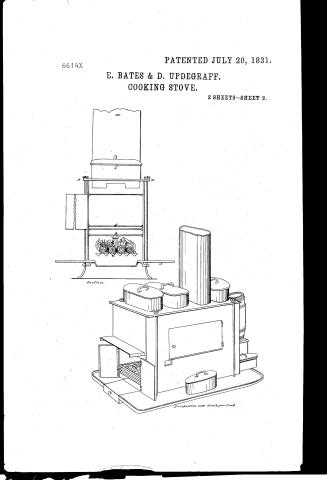
E. Bates and D. Updegraff's Patent Drawing for a Cooking Stove

National Archives, Restored Patent Drawings (Record Group 241) · Full-size scan at the National Archives · Catalog record
Show the text on the drawing Hide (62 words)
Words on the drawing as machine-read by the National Archives; not checked. Useful mainly for searching.
126 stoverapurna.ne / [154] Reservoir Cooking Stoves / E.BA TES & D.UPDEGRAFF / Cooking Store / CLASSIFICATION / 6614-+ / DIVISION / votiz 179 / attated July 1831 / OHIO / etc / 19 / Section / Section with Grate for Wood / Perspe / with Coal / studing pt / plo / Boilers / Patent affice aug 1946 / the / the / in / act / 1837 / Menigh Sunorth / it Del / Plan
USPTO scan
The patent as scanned by the USPTO
-
 Page 1
-
 Page 2
-
 Page 3
-
 Page 4
-
 Page 5
-
 Page 6
-
 Page 7
-
 Page 8
-
 Page 9
-
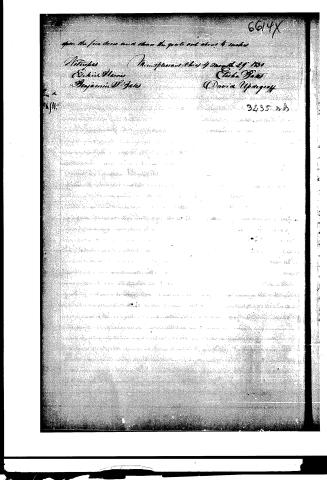 Page 10


U.S. Patent and Trademark Office · Google Patents
Show the transcription Hide (2,503 words)
Machine transcription (LightOnOCR) of the pages as scanned by the USPTO, most of them the handwritten copies made when the records were restored after the 1836 fire. Not checked; it can misread handwriting, so compare it with the scan.
Page 1.
6614X
PATENTED JULY 20, 1831.
E. BATES & D. UPDEGRAFF.
COOKING STOVE.
2 SHEETS—SHEET 1.

Page 2.
6614X
PATENTED JULY 20, 1831.
E. BATES & D. UPDEGRAFF.
COOKING STOVE.
2 SHEETS—SHEET 2.
Section.
Perspective with Grate for Coal.
Page 3.
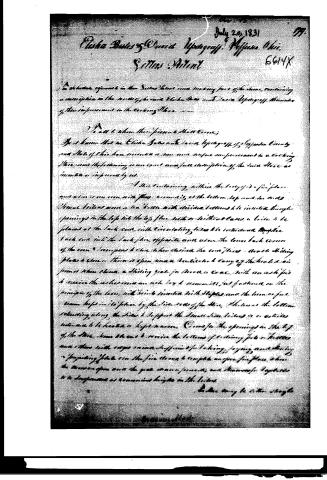
July 20, 1831
Elisha Bates & David Lipagoff, Wyandot, Ohio.
Patent
A new and improved method for making paper.
The process consists in passing a mixture of wood pulp and water through a series of rollers, where the water is removed by heat and pressure, leaving a thin sheet of paper. The sheet is then dried and cut into desired sizes.
This method is more efficient and cost-effective than traditional paper-making techniques, allowing for greater production volumes and higher quality output.
Elisha Bates and David Lipagoff hereby assign this patent to The Paper Manufacturing Company, New York.
Signed,
Elisha Bates
David Lipagoff
Witness:
John Smith
Date: July 20, 1831
Page 4.
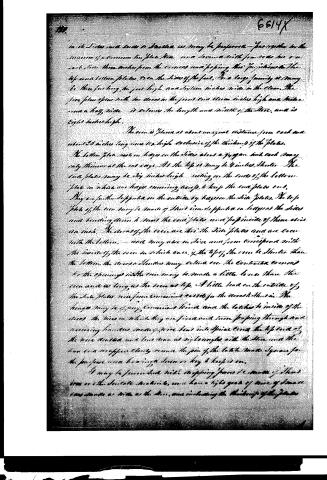
in its Sides and ends in such a manner as may be preferred—For example in the manner of a common tin plate box, and assume with four sides two or each Side three inches from the corners and folding the projections to the left and bottom plates to on the sides of the feet. In a large family it may be three feet long, two feet high and a sixteen inches wide in the clear. The first floor open with two doors in the front two clear inches high and twelve and a half wide it extends the length and width of the Store, and is eight inches high.
There is a floor at about an equal distance from each and about 24 inches long and 16 high exclusive of the thickness of the plates.
The bottom floor rests on lags on the sides about a yard and each may only thirteen at the end ways. At the top it may be 4 inches shorter. The end plates may be 34 inches high resting on the ends of the bottom plate on which are lags running across to keep the end plates out. They are further supported on the outside by lags on the Side plates. The top plate of the box may be made of sheet iron supported on lags on the sides and bending them to meet the end plates and to pop inside of them about an inch. The corners of the box are then the Side plates and are even with the bottom, and may also in size and form correspond with the inside of the box in which case, if the top of the box is shorter than the bottom, the doors or shutters may extend over the Contractor corners to the openings in the box may be made a little lower than the box and as long as the box at top. A little lead on the outside of the Side plates will form convenient catches for the doors shutters. The hinges may be of any convenient kind and the latches to inside of the doors the wires which they are fixed out from popping through and receiving handles may be fixed into special cases the top end of the box started and a lock then at right angles with the door and the box end wrapped closely round the pin of the latch made special for the purpose and having a door or key to keep it on.
It may be furnished with a spring floor in the manner of sheet iron or the Anville Anvilite, and have a high grade of wire of brass and steel as thin as the door, and including the thickness of the plates.
Page 6.
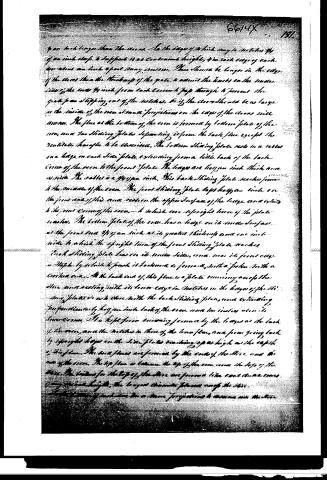
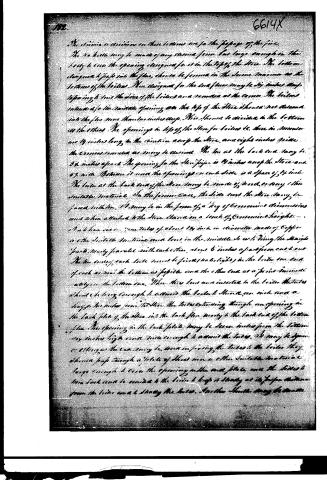
The chimine or chimney on these boilers are for the purpose of the fire. The coal hole may be made of any common iron, but large enough in the body to ease the opening designed for it in the top of the stove. The bottom designed to pass into the fire, should be formed in the same manner as the bottom of the boilers. The designed for the end floor may be six inches deep, depending to suit the size of the boilers and a rounder at the corner. The boilers inserted so the middle opening on the top of the stove should not descend into the fire more than two inches deep. This should be similar to the bottom as the others. The openings in the top of the stove for boilers etc. there in number are 14 inches long in the chimney across the stove, and eight inches wide. The corners rounded as may be desired. The two at the back end may be 3 1/2 inches apart. The opening for the flue pipe is 4 inches across the stove and 6 1/2 wide. Between it and the openings on each side is a space of 1/2 inch. The holes at the back end of the stove may be made of wood or any other suitable material. In the former case, the side next the stove may be faced with iron. It may be in the form of a key of common dimensions and when attached to the stove stand on a tent of common height. It is about one and one-half inches of about 1/4 inch in diameter made of copper or other suitable material and bent in the middle to rest along the straight parts nearly parallel with each other, about 6 inches apart from one to two. The two ends of each tube must be fixed (not tightly) in the boiler one end of each as near the bottom as possible and the other end at a point immediately on the bottom line. When these bars are inserted in the boiler the tubes should be long enough to extend the bottom about one inch more and to pass the tubes from the stove the tubes extending through an opening in the back plate of the stove into the back floor nearly to the back end of the bottom plate. The opening in the back plate may be seven inches from the bottom 20 inches high and wide enough to admit the tubes. It may be square or oblong. The coal may be, and in fixing the tubes to the boiler they should pass through a plate of sheet iron or other suitable material large enough to cover the opening in the end plate and the sides to form back end to extend to the boiler to keep it steady at its proper distance from the boiler and to steady the tubes. Another flue may be inserted.
Page 7.
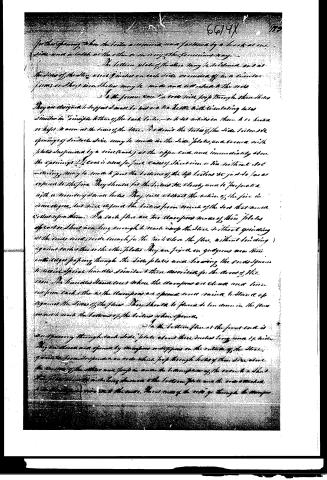
for the opening when the boiler is removed, and fastened by a lock at one side and a latch at the other or in any other convenient way.
The bottom plate of the stove may be widened out at the sides of the flue about 9 inches on each side, and made off in a circular form, or sheet iron, the way to make an ash-pan to the stove.
In the furnace, one or two wide props through three holes they are designed to support small boilers or a kettle with circulating tubes similar in principle to those of the back boiler, as to let air into them to be heated, or kept warm at the sides of the stove. In some the tubes of the side boilers, the openings of suitable size, may be made in the side plates, and covered with plates suspended by a wire (band) at the upper end and immediately above the openings. A cross is used for just cases of short time use without stoking, may be made to join the bottoms of the top boilers so just so far as exposed to the fire. They should for the boilers be closely made, and be perforated with a number of small holes. They must obstruct the action of the fire in some degree, but must defend the boilers from much of the soot that would collect upon them. In each flue are two thin iron pieces made of thin plates of cast iron, that were long enough to reach into the stove without grinding at the ends and wide enough for the fuel along the flue, without binding against each other or the other plates. They are joined on grating bars, their ends being passing through the side plates and having the ends squared to receive spiral handles similar to those described for the doors of the oven. The handles stand clear when the dampers are closed and turn out from each other as the dampers are opened, so as to swing against the sides of the flues. They should be placed so low down in the flues as not to reach the bottoms of the boilers when opened.
In the bottom flue at the front end is an opening through each side plate about three inches long and 12 wide. They are closed and opened by dampers or stoppers on the outside of the stove, and the front damper on one side, which pass through holes of them, 12 inches above the entrance of the other one, pass in above the bottom plate of the oven to a short tube, 12 inches long, joined to the bottom plate and the one attached to the other damper, near the center. There is a way of the tube going through the damper.
Page 8.
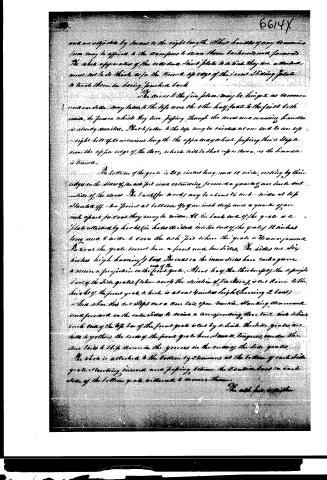
and an adjuster by screws to the right length. These handles of any convenient form may be affixed to the transverse bars near their back ends and forwards. The whole appearance of the oven and front plate is such that they are attached must not be so thick as to the transverse edge of the front sliding plate to touch them in being pushed back.
The doors to the fire place may be hinged as common and one side may belong to the top and the other half to the joint to the inside, the frames which they turn passing through the doors and receiving handles as already described. That portion to the top may be received at one end to one side right half of convenient length the upper edge which passing through a staple near the upper edge of the door, which will be shut upon them, as the handles is turned.
The bottom of the grate is 24 inches long and 12 wide, resting by their edges on the sides of the ash pit and extending forward a quarter of an inch out side of the door. The bars (for wood) may be about 14 inches wide at top, slanting off the joints at bottom 1/2 of an inch deep and a quarter of an inch space for coal they may be wider. At the back end of the grate is a plate attached by hooks (in holes drilled into the body of the grate) 12 inches long and 5 inches to cover the ash pit when the grate is drawn forward. As soon as the grate must have a front and two sides. The sides are 5/8 inches high having 1/2 inch. The cross on the inner sides have each a groove to receive a projection on the front of the grate. About half the thickness of the upright bars of the side grates (taken across the direction of the bars) is cut down to the height of the front grate, which is about 4 inches high (leaving 2 bars). This when this is stopped cuts a row into open mouth slanting downward and forward on the outer sides to receive a corresponding row into which each end of the top bar of the front grate is cut by a hook. The side grates are then to gather, the rows of the front grate have a small tongue, under the side bars to slip down in the grooves in the ends of the side grates.
The sheet is attached to the bottom by screws at the bottom of each side grate slanting inward and passing between the transverse bars on each side of the bottom grate without a receive them.
The ash pan is either
Page 9.
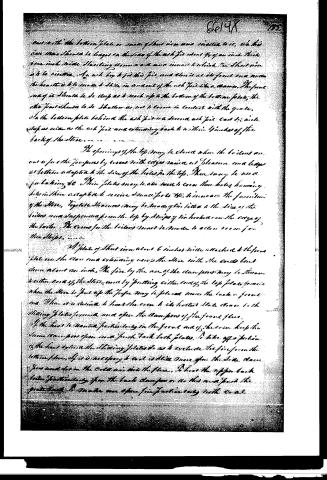
case with the bottom plate or sheet iron and a matter to it, on his case there should be lugs on the sides of the ash pit about 1½ to 2 inches thick, 1 inch wide slanting down in a and inward to which the sheet iron is to be riveted. An ash tray to fit this pit and close it at its front end near the heart is to be made to slide in and out of the ash pit like a drawer. The front end of it should be so steep as to reach up to the bottom of the bottom plate, the other part should be so shallow as not to come in contact with the grate. In the bottom plate behind the ash pit a second ash pit can be made, slanting like the ash pit and extending back to within 4 inches of the back of the stove.
The openings of the top may be closed when the boilers are out or for other purposes by covers with edge riveted at pleasure and lugs at bottom adapted to the size of the holes in the top. There may be used for baking etc. Thin plates may be also used to cover these holes having holes in them adapted to receive small pots etc. to increase the furnishing of the stove. To get the steam may be made of tin fitted to the size of the holes and suspended from the top by strips of tin hooked on the edge of the boiler. The covers for the boilers must be made to allow room for these strips.
A plate of sheet iron about 6 inches wide attached to the front plate near the stove and extending over the stove with the ends bent down about an inch. The fire by the use of the dampers may be thrown to either end of the stove, and by putting either end of the top plate forward when the stove is just up the pipe may be placed near the back or front end. When it is desired to heat the oven to its hottest state close both sliding plates forward and open the dampers of the front plate. If the heat is wanted particularly in the front end of the oven keep the same damper open and push back both plates. To take off a portion of the heat open the sliding plates so as to exclude the fire from the bottom plate. If it is necessary to cool it still more open the side damper and let in the cold air into the stove. When the upper back sliding plate is ready open the back damper or as this end push the front back. To make sure open fire jacket only with coal.
Published accounts: journal notice
Notice in the monthly list of patents, with remarks
Journal of the Franklin Institute, new ser., vol. 9 (1832), p. 42 · View the page
7. For a Cooking Stove; Elisha Bates, and David Updegraff, Mount Pleasant, Jefferson county, Ohio, July 20.
Remarks. This cooking stove has boilers passing through holes in the top, and others with tubes passing through openings in the side; it has also an oven, and various other usual appendages. These are all described at great length in the specification, but there is no attempt in it to point out any thing really new. We have no doubt that when properly managed, it will be a good stove, though not superior to many others. If a patent can be sustained upon such a specification, it must be upon the particular arrangement exactly as described, for whatever of novelty it may present consists in this.
About this record
- Patentee
- DATAMP
- Date
- the Name and Date index of patents, DATAMP, USPTO records
- Invention
- DATAMP
- Listed in
- the Name and Date index of patents, DATAMP, USPTO records, Jim Shaw's X-patent list, the Journal of the Franklin Institute, Burke's List of Patents (1847)
- Burke's 1847 Patent Office list gives the same patent.