

Drawings and documents
National Archives restored drawings: drawing
Thomas H. Sherman's Patent Drawing for a Machine for Mixing Mortar and Making Bricks


National Archives, Restored Patent Drawings (Record Group 241) · Full-size scan at the National Archives · Catalog record
Show the text on the drawing Hide (162 words)
Words on the drawing as machine-read by the National Archives; not checked. Useful mainly for searching.
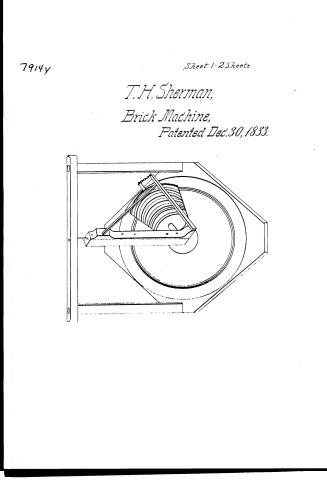
Sheet 1. 2' / 25, Clay & Pottery, / 25 nerick Machines, POTTE / DIV. / Portable Mold; In Carrier, / Approached transverse to feed. / Machine, for Making Mortar / References / A.A.A. The toundation. B.B. The ourve around the mortar bed... C.C. The frame over the foundation / D The shaf seoured by a pivot at top and bottom on which it E an arm supported by abrace fromtheupright / shaft.. F' Wheels with an axle thro its centre sereived to the up right shatt,by,a, pivot and at The out end / connected by a chain to the, arm with a,haok by which the what's is put in motion / CLASSIFICATION / 7914-X / DIVISION / Old / of
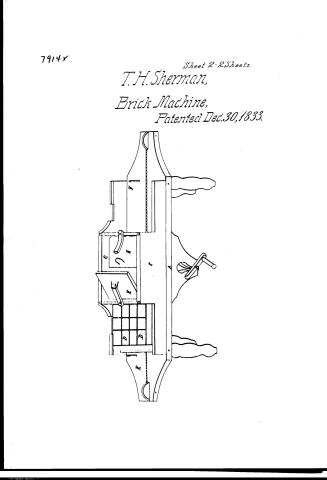
Sheet 2. 2: / 25, Olay & Pottery, / Brick Machines, / Portable Mold: In Carrier, / DIV. 15 / Approached transverse to feed, / $3 / 112 / THOMAS H SHERMAN'S. / CLASSING CATION / MIXING MORTAR & MAKING B RICK be / 7914-+ X / Palented 30%Dec 1833. / DIVISION. / The References gonefromthe original.
USPTO scan
The patent as scanned by the USPTO
-
 Page 1
-
 Page 2
-
 Page 3
-
 Page 4
-
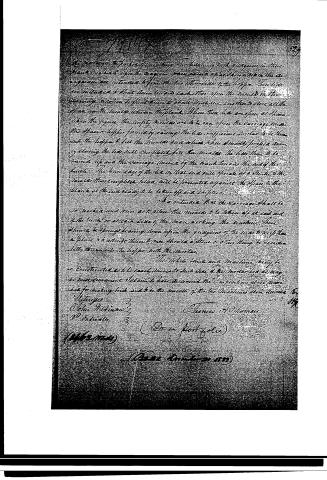 Page 5


U.S. Patent and Trademark Office · Google Patents
Show the transcription Hide (460 words)
Machine transcription (LightOnOCR) of the pages as scanned by the USPTO, most of them the handwritten copies made when the records were restored after the 1836 fire. Not checked; it can misread handwriting, so compare it with the scan.
Page 1.
7914y
Sheet 1-2 Sheets.
T.H. Sherman,
Brick Machine,
Patented Dec. 30, 1833.

Page 2.
7914x
Sheet 2-2 Sheets.
T.H. Sherman,
Brick Machine,
Patented Dec. 30, 1833.
Page 3.
Dec. 30, 1833
Thomas H. Sherman, Author of U.S.
Letters Patent
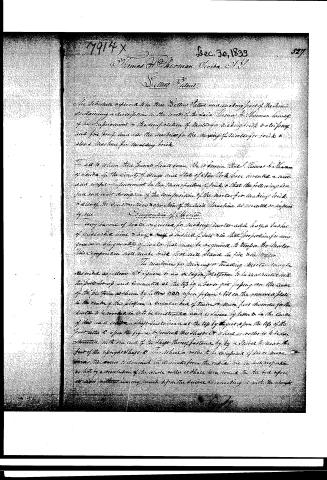
The Schedule refers to the above Letters Patent and making part of the same, containing a description in the words of the said Thomas H. Sherman, Author of the Improvement in the Composition of Mortar for making brick and for prop and for prop and also the Machine for the Making of Mortar for brick and also a Machine for Making brick.
To all to whom these Presents shall come, We, the undersigned, Thomas H. Sherman of the County of Kings and State of New York have invented a new and useful Improvement in the Manufacture of brick and that the following is a full and exact description of the Composition of the Mortar for making brick, and also of the Construction and Operation of the said Machine, as invented or improved by me.
Composition of Mortar
— Every barrel of mortar required for making Mortar shall have a bushel of lime, one bushel of sand, and one bushel of salt in that proportion for any quantity of mortar that may be required to keep the Mortar. This Composition will make brick that will stand in fire and water.
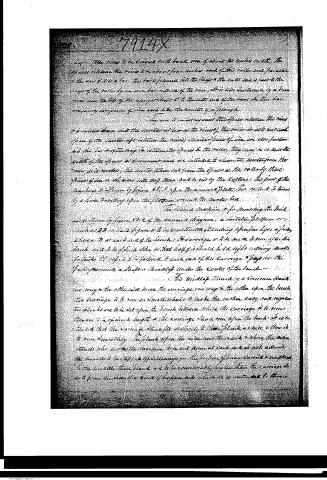
The Machine for Mixing or Treating Mortar may be described as follows: It consists of an octagonal platform to be constructed with the posts set up and connected at the top by a large iron piping over the centre of the platform as shown by letters DDD upon figure 1. At the innermost plate is the centre of this platform a circular hole of three or four feet diameter for the mortar to be worked in, to be constructed and enclosed by letters E in the centre of this case is a shaft sustained at the top by the support from the top of the post letter C upon the figure 2. Inside this shaft is a wheel or roller to be constructed with one end of the shaft thereon fastened by by a chain to near the foot of the upright shaft C. This wheel or roller to be composed of iron or more material than iron to diminish its diameter from the centre in such proportion as that by a revolution of the wheel roller it shall turn round in the mortar as it rises without leaving much upon the device connecting it with the upright.
Published accounts: journal notice
Notice in the monthly list of patents, with remarks
Journal of the Franklin Institute, new ser., vol. 14 (1834), p. 25 · View the page
64. For an improvement in Bricks, and the machinery for making them; Thomas A. Sherman, Scriba, Oswego county, New York, December 30.
Remarks. The title of this patent, as given in the petition, is, “an improvement in the composition of mortar for making bricks water proof and VOL. XIV. No. 1.-JULY, 1834. 4 fire proof; and also machines for mixing the mortar, for brick, and also a machine for moulding brick." In mixing the materials, half a bushel of unslacked lime, and half a bushel of salt are to be added to every barrel of water employed; and this we are told, will make brick which will stand in fire and in water. The grinding machine is a circular trough to contain the mortar, and within this is a roller consisting of six or more wheels revolving upon a shaft drawn round by a horse, and having its inner end properly attached to a vertical shaft. The wheels are to diminish in diameter, as they approach the centre, and each of them is to be covered with a hoop, or tire of iron. These wheels are placed a small distance apart, and iron scrapers, fixed upon bars, pass in between each of them, to scrape out the mortar. At each of these spaces other pieces of iron, like the coulter of a plough, descend down into the mortar, to cut and divide it as the wheels go round. The machine for moulding, consists of a table, or platform, along which a carriage is to be drawn towards either end, by means of a crank, from the shaft of which ropes pass over pulleys. The carriage is to contain a mould for eight bricks, and when this mould is at the middle of the table, it stands between cheeks which rise a few inches above it, and form two sides of a hopper to receive the mortar; whilst two lids, each of which when down covers half the mould, form, when raised, the ends of the hopper; into this, clay enough is to be thrown to make the bricks, and on shutting the lids down it will be squeezed into the moulds; these being drawn forward, the lids operate as a strike; the mould is then to be removed, and a new one applied. The inventor says-" I claim to have discovered the composition above described for making brick, and to be the inventor of the two machines above described." By turning to the patent of Nathaniel Adams, at p. 386 of the last volume, it will appear that, so far at all events as the grinding or mixing machine is concerned, he is not the sole and entire inventor of it, and that his claim is, therefore, much too broad. The moulding machine, as it is presented in the specification, appears to us to be a very imperfect instrument. No mode is described for regulating the quantity of mortar thrown in; for forcing down the doors by which it is to be made to fill the moulds; or to insure the regular distribution of the clay. As regards the composition, we do not know what is intended by its producing a brick which will stand in the fire," as it certainly will not stand as a fire brick; it would not be easy to make a composition for brick which would fuse more readily than that proposed; the alkali in the salt, and the quicklime mixed with the clay and sand of the original compost, will very readily run into glass.
About this record
- Patentee
- Jim Shaw's X-patent list
- Date
- the Name and Date index of patents, USPTO records, Jim Shaw's X-patent list
- Invention
- the Name and Date index of patents
- Listed in
- the Name and Date index of patents, USPTO records, Jim Shaw's X-patent list, the Journal of the Franklin Institute, Burke's List of Patents (1847)
- Burke's 1847 Patent Office list gives the same patent.